Method & Science
Not all fungi are created equal.
A traditional method, carried out with modern care — from the hillside to the bottle.
01 Our process
Separated, purified, reunited.
Spagyric preparation was described by Paracelsus in the 16th century. We extract in sequence, so each class of compound is drawn out in turn — then reunite them in the finished tincture. It takes weeks, not hours.
I
Spirit
The volatile fraction, drawn with high-proof ethanol at low temperature using ultrasonic extraction — never heat and pressure.
II
Soul
The water-soluble fraction — the beta-glucans and polysaccharides — drawn in a second, separate extraction.
III
Body
The remaining material is reduced to its mineral salts and returned to the tincture. Separated, purified, reunited.
02 The whole mushroom
More than a single pass.
Most commercial extracts take one extraction — hot water or alcohol — and bottle the result. Those are not bad products, but they do not carry the whole of the mushroom: the water-soluble and alcohol-soluble fractions, and the mineral salts, each need to be drawn out in their own right.
Our method is slower and more expensive to run. We think the difference is in the bottle. We are honest that the science here is active and incomplete — so we describe what we do, not what it will do for you.
03 In the mushroom
The compounds we work with.
A factual note on the naturally occurring compounds in the species we prepare — composition, not claims.
Ganoderma Blend
Ganoderma sinense · multipileum · sessile · curtisii · lingzhi · lucidum
Triterpenoids (including ganoderic acids), polysaccharides and sterols. Known across East Asia as reishi, with one of the longest records of traditional use of any functional mushroom.
Lion's Mane
Hericium erinaceus
Erinacines (in the mycelium) and hericenones (in the fruiting body) — the naturally occurring compounds that characterise this species.
Cordyceps
Cordyceps sinensis
Cordycepin (3ʹ-deoxyadenosine), adenosine and beta-glucans — among the compounds that characterise genuine Cordyceps sinensis.
Food supplements. Not intended to diagnose, treat, cure or prevent any disease.
04 Cultivation
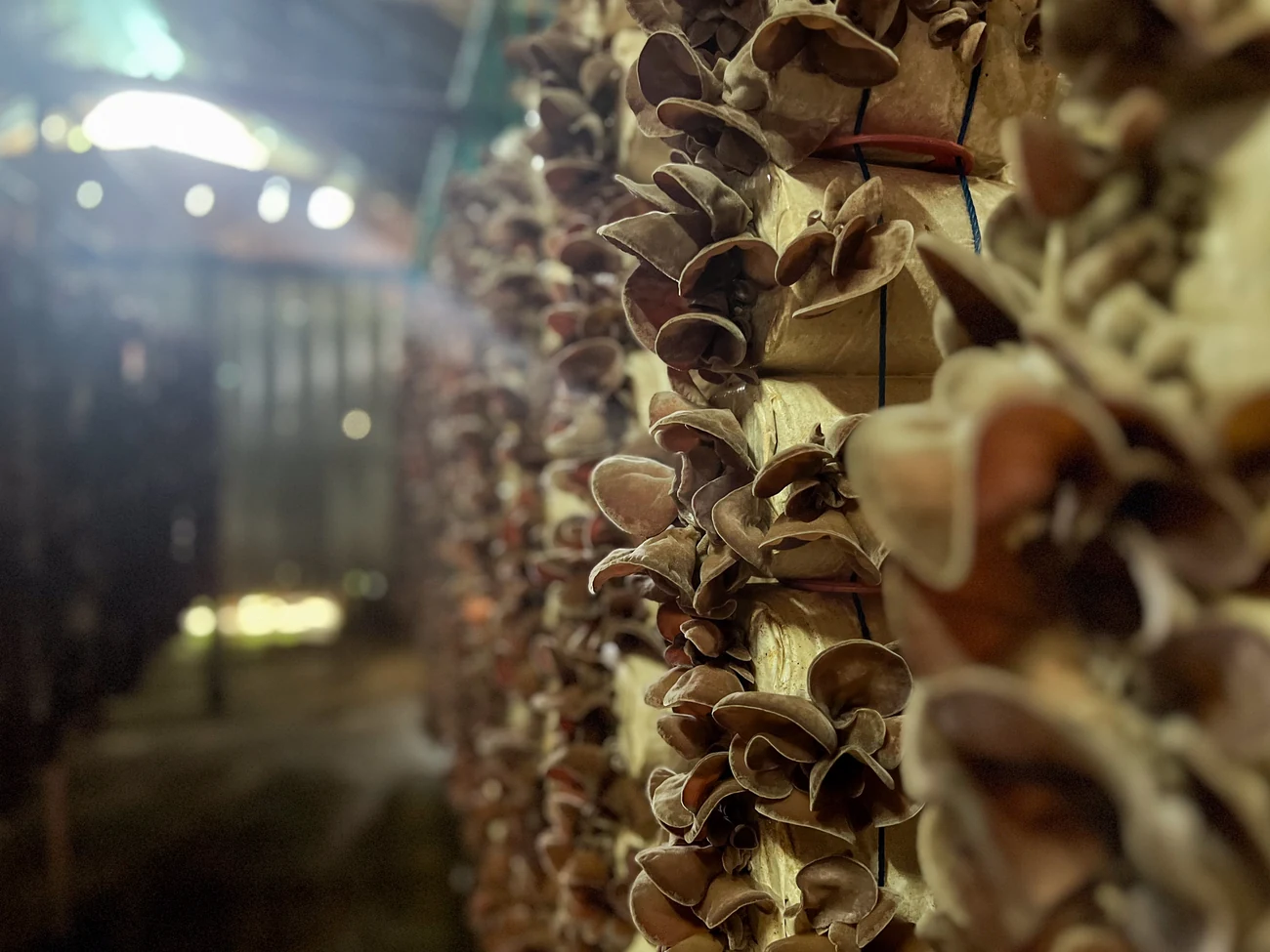
The substrate becomes part of the mushroom.
For our wood-loving varieties we grow on clean beech and birch — food-grade hardwood chosen for the nutritional and structural properties it gives the mycelium.
We rejected the generic sawdust from tree surgeons and the compressed fuel pellets many growers default to. We rejected soy hulls — common because they grow larger, heavier crops — for the GMO, deforestation and residue concerns that follow them. Quality over yield is the operating principle, not a slogan.
The whole mushroom, the whole way