Our story
A family. A hillside.
A craft most of the world has forgotten.
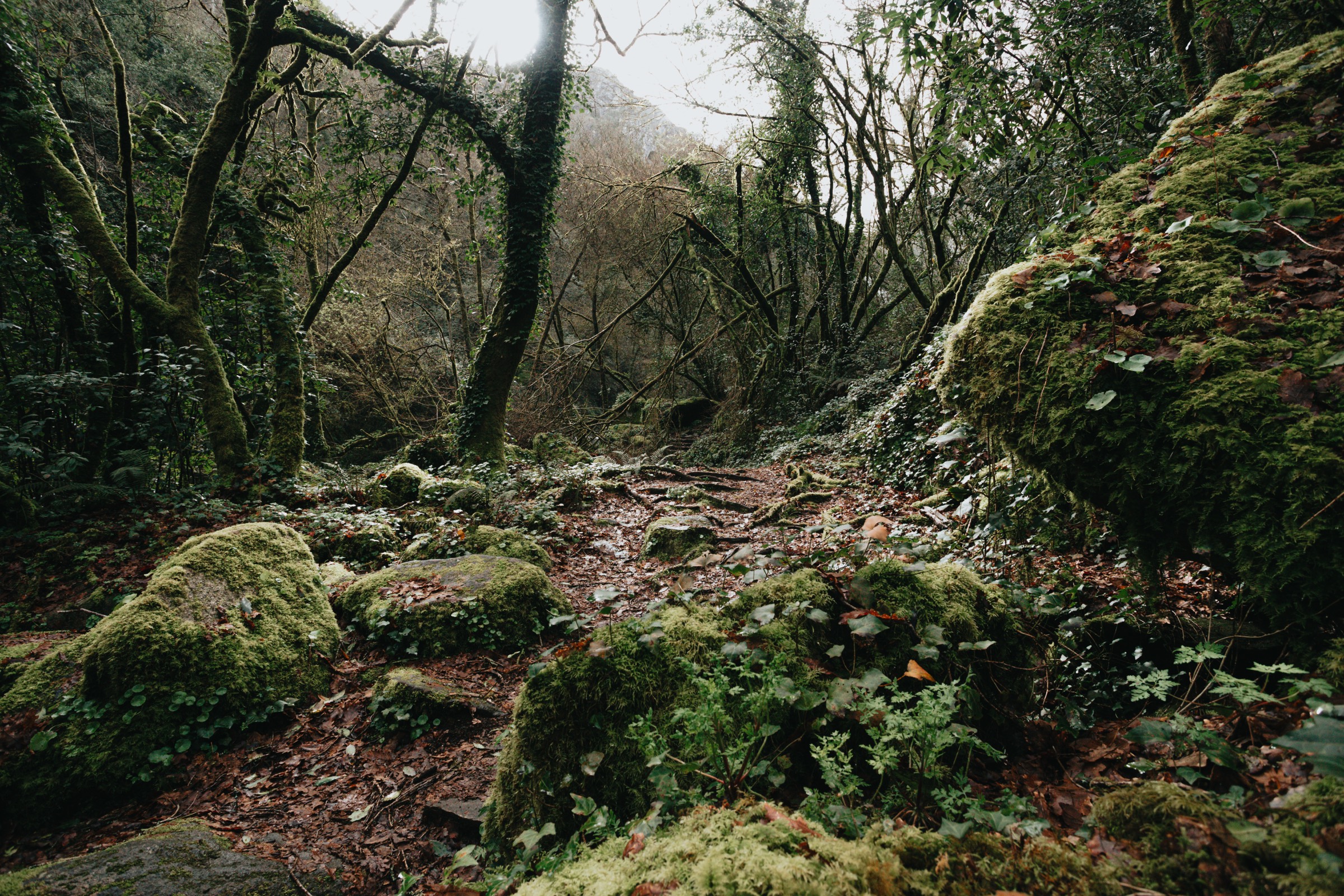
Years spent growing, foraging and learning to prepare mushrooms properly, on a hillside in Eryri.
01 The place
Where the mountains do the work.
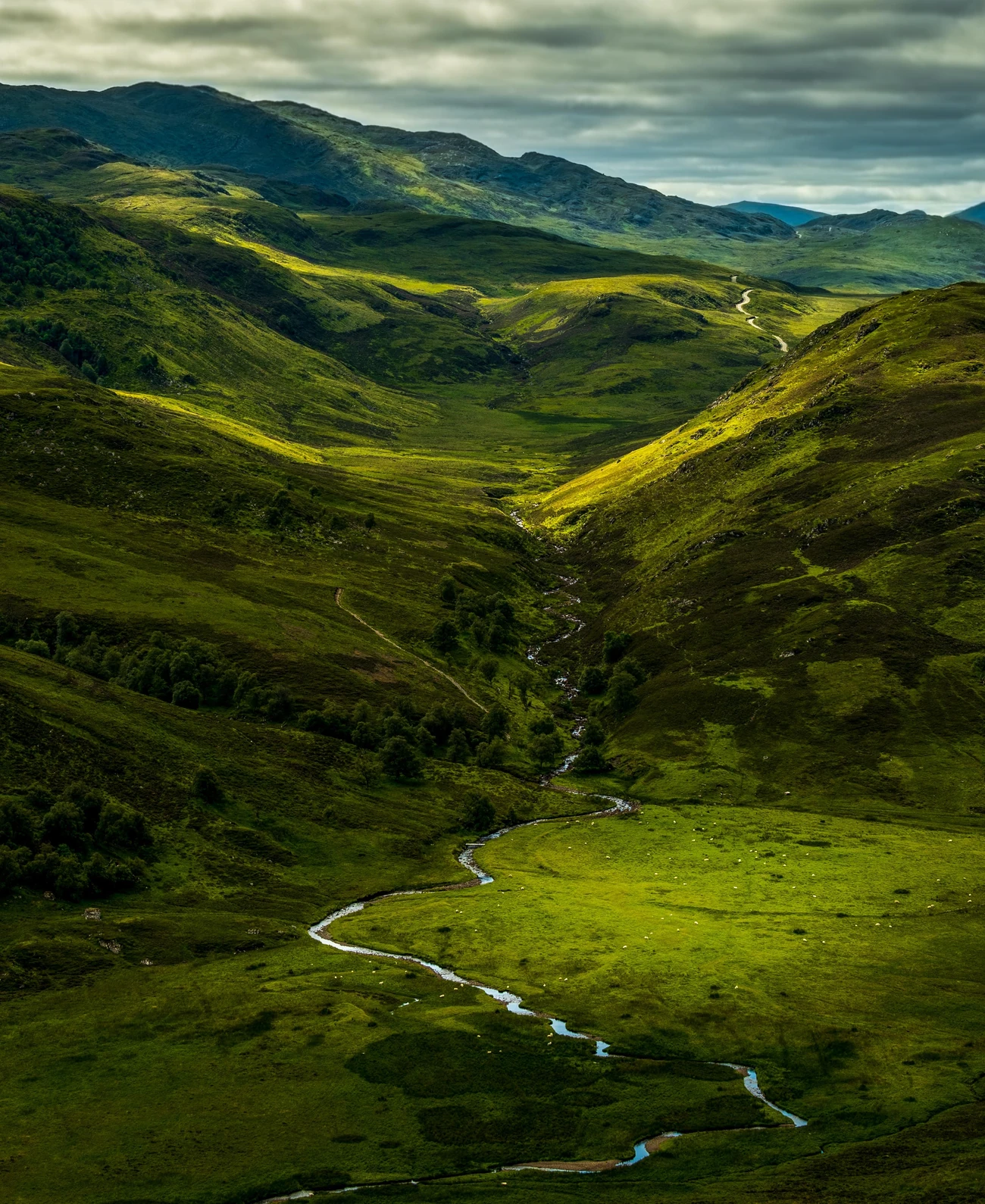
The Eryri foothills do not attract attention easily. The roads narrow. The valleys deepen. The Welsh sky does what it wants. It is not a landscape that performs for visitors — it simply exists, on its own terms, as it always has.
It is also, for reasons of altitude, rainfall and the mineral character of the upland soils, one of the finest places in Britain to grow fungi. We did not choose it because it sounded romantic. We chose it because it works.
The high humidity that settles on the hillside and the temperature rhythms that shift properly with the seasons — the conditions large facilities spend enormous energy trying to replicate, here, simply exist. The place itself is part of the product.
02 The family
We did not set out to build an apothecary.
This is a family operation. Everything here — the cultivation, the extraction, the bottling — is done by us, on our land, with our own hands. That is not a marketing position. It is simply the truth of how this place runs.
The beginning of it was personal, and we think it is worth being honest about that. Several years ago, a health challenge in our family changed the questions we were asking. We navigated it together — the appointments, the uncertainty, the slow recovery — and it set us on a path we would not otherwise have taken.
That search led us into the literature on functional mushrooms — not wellness marketing, but the deeper record: the ethnobotanical accounts, the long traditions of East Asian herbalism, and the mycology papers that had been accumulating in academic journals for decades.
The more we read, the less it felt like a detour. It felt like an arrival. Years later, we are still here — still learning, still growing.
03 The discovery
A method that makes strange sense.
Spagyric preparation was described by Paracelsus in the 16th century. The word comes from the Greek — to draw out, and to gather together. The method separates the material into its parts: the volatile fraction captured through distillation, the mineral salts recovered from the spent material, before reuniting everything in the finished tincture.
It sounds elaborate because it is. Several weeks per batch, multiple distinct stages, each requiring close attention — the kind of process that demands you actually care about what you are making.
Most commercial extracts take a single pass — hot water or alcohol — and bottle the result. Those are not bad products, but they do not carry the whole of the mushroom. We chose the longer road: a traditional method, carried out with modern care. That is the only description that feels accurate.
04 The operation
Small by design. Not by accident.
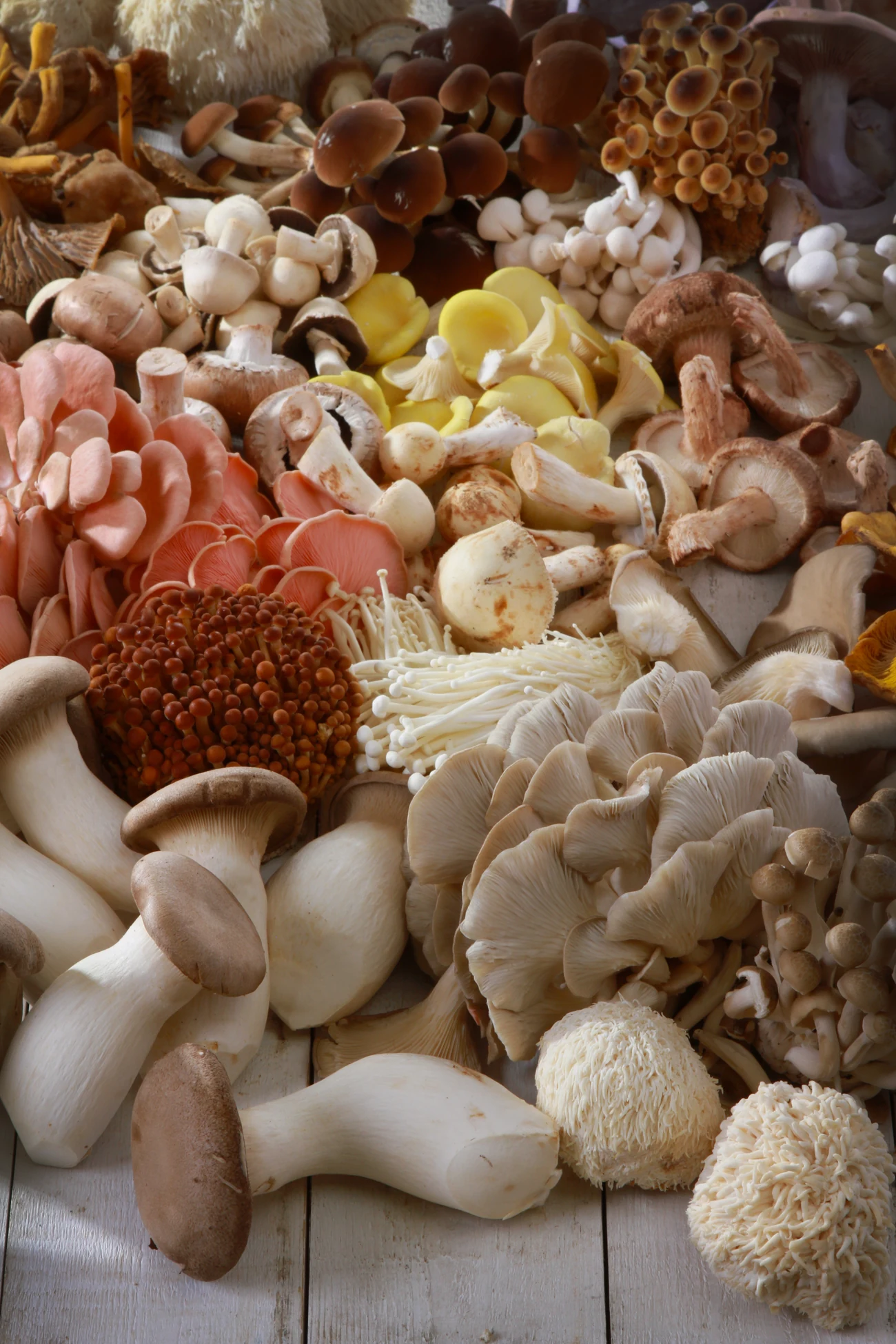
We cultivate Lion's Mane, Ganoderma and Cordyceps in-house, alongside several other species, in purpose-built tunnels on the hillside. Each variety receives a substrate developed specifically for it.
The substrate question took us months to resolve. For our wood-loving varieties we grow on clean beech and birch — food-grade hardwood chosen for the nutritional and structural properties it gives the mycelium. We rejected the generic hardwood sawdust from tree surgeons and the compressed fuel pellets many growers default to. They are convenient. They are not good enough.
“If you know, you know. Not all fungi are created equal.”
We also rejected soy hulls — common in commercial recipes because they produce larger, heavier crops. We weighed the trade-offs: GMO soy, the deforestation that follows large-scale soy, the potential for residues to carry through. Larger crops are not worth it. Quality over yield is not a slogan here; it is the operating principle.
Water comes from the springs above the farm. Each fruiting cycle is monitored individually. If a batch is not right, it does not leave the farm.
05 Our standard
No shortcuts. No concentrates. No powders.
Every tincture passes through the full spagyric cycle without abbreviation. We use low-temperature ultrasonic extraction rather than heat and pressure — slower and more expensive to run, but it does not degrade the compounds we have spent weeks cultivating.
Everything is hand-harvested and hand-bottled. No automated filling line, no warehouse operation. A small family, a hillside in Wales, and a process we respect too much to rush.
We are honest about what we know and what we do not. The science around functional mushrooms is active and interesting — and incomplete. We do not pretend otherwise, and we make no health claims. What we offer is a traditional craft, carried out rigorously, using species with long histories of use.
What comes next
The work continues.
Still a small operation, still on the same hillside, still doing things the slow way. If that is worth something to you, we would be glad to have you.